How Many ml in a Cup? US, Metric and UK Cups Explained
There are 236.6 ml in 1 US cup. Most recipes and nutrition labels round that to 240 ml, and many people simply use 250 ml, which is the size of a metric cup. So ½ cup is about 118 ml, ¼ cup is about 59 ml, and 2 cups are about 473 ml.
Which number you should use depends on where your recipe comes from. An American recipe means the 236.6 ml cup, while an Australian or New Zealand recipe means a 250 ml cup. The difference is small for one cup but adds up quickly in big batches.
For any other amount, use the cups to ml converter or go the other way with the ml to cups converter.
Cups to ml chart (US cup)
| Cups | Milliliters (exact) | Rounded for cooking | Tablespoons |
|---|---|---|---|
| ⅛ cup | 29.6 ml | 30 ml | 2 tbsp |
| ¼ cup | 59.1 ml | 60 ml | 4 tbsp |
| ⅓ cup | 78.9 ml | 80 ml | 5 tbsp + 1 tsp |
| ½ cup | 118.3 ml | 120 ml | 8 tbsp |
| ⅔ cup | 157.7 ml | 160 ml | 10 tbsp + 2 tsp |
| ¾ cup | 177.4 ml | 180 ml | 12 tbsp |
| 1 cup | 236.6 ml | 240 ml | 16 tbsp |
| 1½ cups | 354.9 ml | 355 ml | 24 tbsp |
| 2 cups | 473.2 ml | 475 ml | 32 tbsp |
| 3 cups | 709.8 ml | 710 ml | 48 tbsp |
| 4 cups | 946.4 ml | 950 ml | 64 tbsp |
The rounded column is fine for soups, sauces and drinks. For baking, especially cakes and custards, stick closer to the exact figure or use a jug with ml markings.
Popular single conversions
- 1 cup to ml: 236.6 ml (see the 1 cup to ml page)
- ½ cup to ml: 118.3 ml (half cup to ml)
- ¾ cup to ml: 177.4 ml (three quarter cup to ml)
- ⅓ cup to ml: 78.9 ml (third cup to ml)
- ⅔ cup to ml: 157.7 ml (two thirds cup to ml)
Why is a cup 236.6 ml and not 250 ml?
The US customary cup comes from the old American gallon. A US gallon is 128 fluid ounces, a cup is 8 of those fluid ounces, and each US fluid ounce is about 29.57 ml. Eight of them make 236.6 ml.
Countries that switched to the metric system rounded the cup to a tidy 250 ml. That's why a cup from Australia, New Zealand or Canada holds about 6% more than an American one.
Why nutrition labels say 240 ml
On US food labels, the US Food and Drug Administration uses a "legal cup" of 240 ml for serving sizes. It's a rounded version of the customary cup, which is why you'll often see "1 cup (240 ml)" on cartons of milk and juice.
Cup sizes around the world
| Cup | Milliliters | Where you'll see it |
|---|---|---|
| US customary cup | 236.6 ml | American recipes and measuring cups |
| US legal cup | 240 ml | US nutrition labels |
| Metric cup | 250 ml | Australia, New Zealand, Canada, many online recipes |
| Imperial cup | 284 ml | Older British recipes |
| Japanese cup | 200 ml | Japanese recipes and rice cookers (a rice cooker "cup" is smaller still, about 180 ml) |
If a recipe doesn't say which cup it uses, check where the author is based. For a deeper look, read our guide to the US cup vs metric cup vs UK cup.
ml to cups chart
Going the other way is common when a European recipe lists liquids in ml and you only own American cups.
| Milliliters | US cups (approx.) |
|---|---|
| 50 ml | 0.21 cup (about 3½ tbsp) |
| 100 ml | 0.42 cup (a little under ½ cup) |
| 125 ml | 0.53 cup (just over ½ cup) |
| 150 ml | 0.63 cup (about ⅝ cup) |
| 200 ml | 0.85 cup (a little under 1 cup) |
| 250 ml | 1.06 cups (1 cup + about 1 tbsp) |
| 300 ml | 1.27 cups (1¼ cups) |
| 500 ml | 2.11 cups (2 cups + about 2 tbsp) |
| 750 ml | 3.17 cups (3 cups + about 3 tbsp) |
| 1 liter | 4.23 cups |
To convert any number, divide the ml by 236.6. For example, 400 ml ÷ 236.6 = 1.69 cups, a little under 1¾ cups.
Does a cup of flour have the same ml as a cup of water?
Yes. A cup is a measure of volume, so a cup of flour, sugar or water always takes up 236.6 ml of space.
The weight is what changes. A cup of water weighs about 237 g, but a cup of flour weighs only about 125 g because flour is light and airy. If your recipe gives grams, use the grams to cups converter instead, or see our chart of how many grams are in a cup.
How to measure ml accurately with cups
- Use a clear liquid measuring jug for water, milk, stock and oil. Set it on the counter and read the line at eye level.
- Use dry measuring cups for flour and sugar, filled and levelled with a knife.
- Use spoons for small amounts. Anything under ¼ cup is easier to measure in tablespoons: 1 tbsp is about 15 ml.
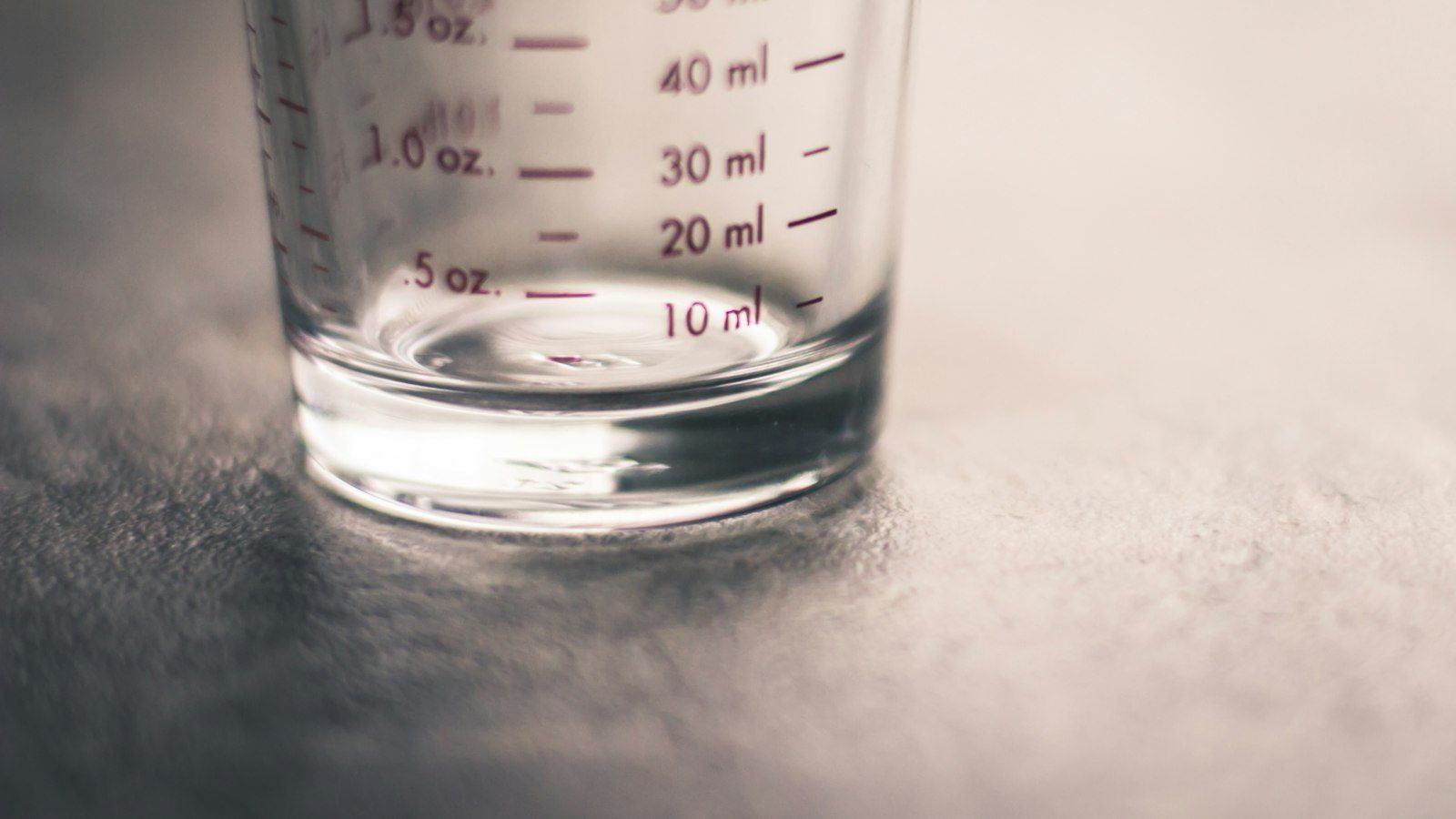
- Check the markings. Many jugs show both cups and ml. If yours shows 250 ml at the "1 cup" line, it's a metric cup.
For a printable version of these numbers, grab our free kitchen conversion chart.
Frequently asked questions
How many ml are in 1 cup?
1 US cup is 236.6 ml. Recipes often round it to 240 ml, and a metric cup is 250 ml.
Is 1 cup 250 ml?
Only if it's a metric cup, used in Australia, New Zealand and Canada. A US cup is 236.6 ml.
How many ml are in ½ cup?
½ US cup is 118.3 ml, usually rounded to 120 ml.
How many cups is 500 ml?
500 ml is about 2.11 US cups, or 2 cups plus about 2 tablespoons.
How many ml in a cup of water?
The same as any other cup: 236.6 ml in a US cup. A cup of water also weighs about 237 g.
How many fluid ounces is a cup?
A US cup is 8 fluid ounces. See how many ounces are in a cup for the difference between fluid and dry ounces.
The bottom line
A US cup is 236.6 ml, rounded to 240 ml on labels, while a metric cup is 250 ml. For everyday cooking either rounded number works. For baking, use the exact figure or the cups to ml converter.